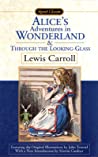
Lewis Carroll’s Alice’s Adventures in Wonderland (1865) follows Alice, a curious and imaginative young girl, who tumbles down a rabbit hole into a fantastical underground world governed by absurdist logic and nonsensical rules. What begins as a straightforward chase after a waistcoat-wearing White Rabbit spirals into a series of increasingly bizarre encounters with creatures and characters who challenge Alice’s sense of identity, reason, and propriety. Carroll — the pen name of Oxford mathematics lecturer Charles Lutwidge Dodgson — wrote the story originally to entertain Alice Liddell and her sisters during a rowing trip, and that spirit of playful, improvisational storytelling never left the final text.
The book’s genius lies in its sustained subversion of the safe, moralistic children’s literature of the Victorian era. Where other tales instructed children on obedience and virtue, Carroll’s Wonderland rewards curiosity and punishes rigid thinking. Alice is constantly forced to adapt — growing and shrinking, reciting poems that come out wrong, navigating conversations where words mean whatever the speaker insists they mean. The adults and authority figures she meets (the Queen of Hearts, the Duchess, the Caterpillar) are pompous, irrational, or casually cruel, and the only way Alice survives is by holding onto her own sense of self even as Wonderland steadily erodes it. Carroll’s prose is nimble and witty, full of puns, logical paradoxes, and parodies of well-known Victorian verse that reward adult readers as much as children.
Key takeaways
-
Identity as a central theme: Alice’s repeated question — who am I? — drives the narrative. Transformations in size, failed recitations, and creatures who refuse to accept her self-definitions force her to defend and rediscover her sense of self throughout the journey.
-
Language as power and instability: Wonderland runs on the manipulation of language. Characters like Humpty Dumpty (in the sequel, but foreshadowed here) and the Mad Hatter demonstrate that meaning is contested and contextual, anticipating later theories of linguistics and making the book a surprisingly rich text for literary theory.
-
Satire of Victorian authority: The Queen of Hearts, the court, and nearly every adult figure parody the arbitrary exercise of power. Rules exist to be invoked selectively, punishments precede verdicts, and ceremony masks total chaos — a pointed critique of institutional life dressed up in nursery colors.
-
Mathematical and logical games: Carroll’s background in mathematics surfaces in the story’s puzzles, paradoxes, and inversions. The tea party is stuck in an endless loop; the Caucus Race has no winner or loser; size and time behave as variables rather than constants. The whimsy has a precise internal structure.
-
The dream-logic framework: The entire adventure is framed as a dream, which licenses the story’s radical departures from realism while also giving it emotional weight. Dreams in Carroll’s hands are not restful escapes but vertiginous experiences that mirror the disorientation of childhood — when the rules of the adult world are opaque and enforcement feels random.
-
Curiosity as the hero’s defining virtue: Unlike the passive heroines of many Victorian tales, Alice acts. She follows the rabbit, drinks the bottles, enters the garden. Her curiosity gets her into trouble but also drives her forward, and Carroll frames it as a fundamentally admirable quality rather than a dangerous flaw to be corrected.