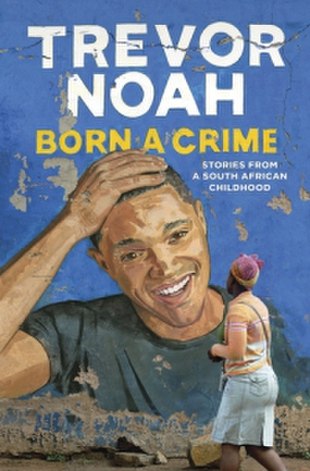
Trevor Noah’s memoir recounts his childhood and adolescence in South Africa, spanning the final years of apartheid and the turbulent transition to democracy. The title refers to Noah’s very existence: under apartheid law, sexual relations between a Black person and a white person were illegal, making him, the mixed-race child of a Black Xhosa mother and a Swiss-German father, literally a crime. Noah uses this striking premise to explore identity, race, poverty, language, and survival, weaving together personal stories that are alternately hilarious and heartbreaking.
The book is structured as a series of loosely chronological essays, each anchored in a specific period or episode of Noah’s life. He writes about growing up in Soweto and the township of Eden Park, navigating multiple racial and cultural worlds as someone who fit neatly into none of them, running small hustles as a teenager, and witnessing the grinding hardships that poverty imposed on the people around him. Throughout, the central figure is his mother, Patricia Nombuyiselo Noah — a fiercely devout, fiercely independent woman whose stubborn joy and refusal to be diminished by circumstance shaped her son profoundly. Noah’s voice is warm, self-deprecating, and sharp, blending stand-up comedian timing with genuine emotional depth. He has a gift for using the absurd details of his own story to illuminate much larger truths about how race is constructed, performed, and enforced.
Key takeaways
-
Existence as resistance. Noah frames his mixed-race birth not just as a personal origin story but as a direct act of defiance against a legal and political system designed to enforce racial separation. His mother chose to have him knowing the risks, and he argues this made her a quiet revolutionary.
-
Language as power and belonging. One of the book’s most striking insights is Noah’s observation that speaking someone’s language — he grew up fluent in Zulu, Xhosa, Sotho, Afrikaans, and English — grants you instant in-group status. He used this ability to move between communities that would otherwise have been hostile to him, and he sees linguistic fluency as one of the most practical tools a person can possess.
-
The complexity of South African racial categories. Noah carefully explains how apartheid did not simply divide people into Black and white, but enforced a rigid hierarchy among Black Africans, Coloured people, Indians, and whites — each with different legal privileges and social statuses. His own mixed-race ambiguity meant he was categorized differently depending on context, giving him an unusually clear view of how arbitrary and yet devastatingly consequential these distinctions were.
-
Poverty’s particular cruelties. Several chapters deal with the economics of township life with unflinching specificity — what it means to have no money for school supplies, how informal economies and small-scale crime function as survival mechanisms, and how easily one bad break can unravel whatever fragile stability a family has managed to build. Noah is careful never to romanticize deprivation.
-
His mother as the book’s moral center. Patricia Noah emerges as one of the most memorable figures in recent memoir writing. Her faith, humor, and ferocious determination to give her son a different life than the one apartheid intended for him drive the narrative forward. The book’s most devastating and ultimately uplifting section deals with the brutal violence she survived at the hands of Noah’s stepfather, Abel, and the complicated emotions Noah had to reckon with in the aftermath.
-
The post-apartheid transition was not a clean break. Noah is at pains to show that the end of apartheid did not instantly undo the psychological, economic, and social damage centuries of racial oppression had caused. The townships remained poor, violence remained common, and many of the hierarchies and self-destructive patterns apartheid had engineered persisted long after the laws were struck down.
-
Comedy as a coping mechanism and a tool for truth. Implicitly throughout the book, Noah makes the case that humor — specifically the ability to find the absurdity in oppressive systems — was both a survival strategy for him personally and a way of exposing those systems to scrutiny. His comedic instincts are visible on every page, but the jokes never undercut the seriousness of what he is describing.