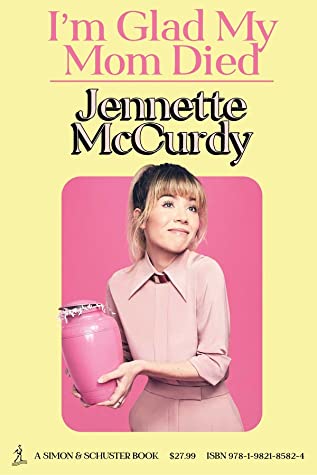
Jennette McCurdy’s memoir is a raw, unflinching account of her childhood and young adulthood as a child actor, told through the lens of a deeply complicated and damaging relationship with her mother, Debbie. McCurdy, best known for her role on the Nickelodeon series iCarly, pulls back the curtain on what seemed from the outside like a successful career and a close-knit family, revealing instead a story of emotional manipulation, disordered eating, and a mother who lived vicariously through her daughter at enormous cost. The title, provocative as it is, functions as the book’s thesis: McCurdy spent decades unable to be honest about her own suffering because her mother was alive, and her mother’s death became the condition under which she could finally begin to heal.
The memoir is written in McCurdy’s distinctive voice — sharp, darkly comic, and disarmingly direct. She describes her childhood with a precision that is both clinical and tender, oscillating between the child who adored her mother and the adult who can now name what was done to her. She writes about being put on restrictive diets as a young girl, being taught to calorie restrict and purge, and having her body regularly measured and assessed by her mother — all of it framed by Debbie as love, as care, as the sacrifice a devoted mother makes for a daughter’s career. The genius of the book is how well McCurdy renders the psychological fog of that dynamic: the way abuse is invisible when the abuser is also the person you love most in the world.
McCurdy also gives a frank and often grimly funny portrait of the child entertainment industry, describing auditions, on-set politics, and the particular indignity of being a young woman on a network television show. She writes about “The Creator,” a thinly veiled but legally cautious reference to a powerful Nickelodeon producer who behaved inappropriately toward her, and about being offered a bribe to stay quiet about her experiences at the network. Throughout, she is candid about her own complicity and confusion, her eating disorders — which she developed in part because her mother encouraged them — her struggles with alcohol, and the years of therapy it took to begin understanding what had happened to her. The memoir ends not with triumph so much as with the tentative, hard-won recognition that her life might finally be her own.
Key takeaways
-
The relationship with her mother was the central trauma of McCurdy’s life. Debbie pushed her daughter into acting against Jennette’s own wishes, managed her body and eating habits obsessively, and instilled in her a belief that her worth was tied entirely to her mother’s approval and her career.
-
McCurdy developed serious eating disorders — including anorexia and bulimia — as a direct result of her mother’s behavior. Debbie introduced restrictive eating and body monitoring when Jennette was very young, normalizing it as part of maintaining a castable physique, and the disorders persisted well into adulthood.
-
The child entertainment industry is portrayed as exploitative and often harmful. McCurdy describes the power imbalances on set, the lack of support for young performers, and an industry culture that rewards compliance and punishes self-advocacy.
-
“The Creator” incident reveals a culture of silence at Nickelodeon. McCurdy describes being offered $300,000 in what she perceived as hush money to discourage her from speaking publicly about her experiences on the network, which she ultimately declined.
-
Grief is not simple, especially when the person you’ve lost was also your abuser. McCurdy is honest about mourning her mother while also recognizing that her mother’s death removed the psychological obstacle that had prevented her from examining and speaking about the truth of her childhood.
-
Recovery from trauma requires naming it. A significant theme of the book is how long it took McCurdy to find language for her experiences — through therapy, through writing, and through comedy — and how that naming became the foundation of her healing.
-
The book is ultimately about reclaiming authorship of one’s own life. McCurdy quit acting, the career she never chose, and turned to writing and directing as expressions of who she actually is — a resolution that feels earned rather than tidy.