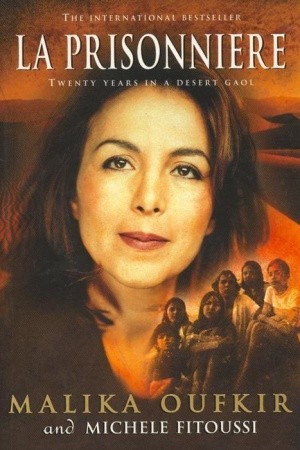
Malika Oufkir’s memoir recounts one of the most extraordinary and harrowing stories of survival in modern history. As the eldest daughter of General Mohamed Oufkir — the powerful Moroccan military commander who orchestrated a failed coup attempt against King Hassan II in 1972 — Malika and her five siblings were imprisoned for nearly two decades in a series of increasingly brutal detention facilities. The story begins in an almost fairy-tale register: Malika had spent much of her childhood as a ward of the royal palace, raised in proximity to the king as a companion to his daughter, educated, privileged, and entirely removed from ordinary Moroccan life. That gilded existence makes the subsequent fall all the more devastating when, after her father’s execution, the entire family is swallowed whole by the Moroccan state apparatus.
Written in collaboration with journalist Michèle Fitoussi, the memoir moves between two emotional registers — the disbelief of early confinement and the grinding psychological and physical deterioration of years without sunlight, adequate food, or medical care. Malika’s voice is remarkably restrained given the subject matter; she describes horror with the measured clarity of someone who has spent years processing grief and anger into something more durable. The book does not wallow or editorialize excessively — it trusts the facts to do their work. What emerges is not only a political testimony about the ruthlessness of an authoritarian regime but also an intimate portrait of a family forged into fierce solidarity by shared suffering. Her mother’s quiet dignity, her youngest siblings who grew up knowing almost nothing but captivity, and Malika’s own ingenuity and ferocious will to survive all become vivid and indelible.
The final third of the book describes the family’s astonishing escape — the tunnel they dug by hand over many months — and then the painful aftermath of re-entry into a world that had moved on without them. Freedom, it turns out, is its own form of disorientation, and Malika’s account of learning to navigate ordinary life as a woman in her thirties who has effectively lost her youth is among the book’s most quietly devastating passages. Throughout, the memoir raises uncomfortable questions about loyalty, complicity, the arbitrary nature of royal favor, and the particular vulnerability of children to the political crimes of their parents.
Key takeaways
-
The privilege-to-prison trajectory is central to the memoir’s power. Malika’s early years in the royal palace, pampered and adored, provide a stark and deliberate contrast to the degradation of imprisonment, underscoring how completely political fortune can reverse and how those closest to power are often most exposed to its violence.
-
Children bear the punishment for their parents’ actions. The youngest Oufkir siblings — some of whom were toddlers at the time of their father’s coup — grew up in captivity, an indictment of the collective punishment logic employed by the Moroccan state and a reminder of how authoritarianism extends cruelty across generations.
-
Solidarity within the family became the primary survival mechanism. With no external support, the Oufkir children and their mother developed an intensely interdependent emotional unit. Malika, as the eldest, took on a protective and organizing role that shaped her identity throughout the ordeal.
-
The escape tunnel represents both literal and symbolic defiance. The family’s months-long effort to dig a tunnel out of their final prison is the memoir’s climactic act — an assertion of agency and ingenuity under conditions designed to eliminate both.
-
Liberation does not equal recovery. Malika is candid about the alienation and psychological difficulty of readjusting to freedom after nearly twenty years of confinement, challenging any simple narrative of rescue and redemption.
-
The book is an implicit indictment of King Hassan II’s regime, though Malika navigates this carefully; the political critique is embedded in lived detail rather than direct accusation, which gives it an understated but persistent force.
-
Memory and collaboration shape the narrative voice. Written with Fitoussi’s journalistic assistance, the memoir achieves a clarity and readability that serves the story well, though it also raises questions — implicit rather than explicit — about how trauma is translated, ordered, and made consumable for a wide audience.