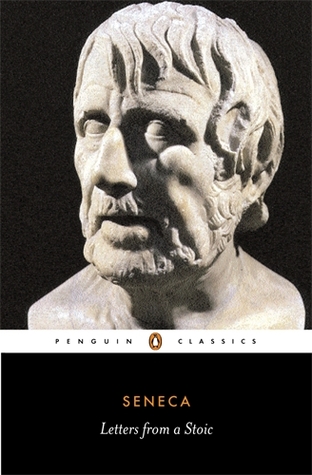
Seneca’s Letters from a Stoic — known in Latin as the Epistulae Morales ad Lucilium — is a collection of 124 letters written in the final years of the philosopher’s life to his younger friend Lucilius, a Roman official stationed in Sicily. Though cast as personal correspondence, the letters function as philosophical essays, each taking some small occasion — a crowd at the games, a visit to a friend’s estate, the onset of illness, the fear of a sea voyage — and expanding it into sustained moral reflection. The collection is less a systematic treatise than a living conversation, and Seneca’s voice throughout is warm, self-deprecating, and urgent: he writes as a man who knows he is running out of time and who wants Lucilius — and himself — to use what remains well.
The central argument running through all the letters is that philosophy is not an academic exercise but a daily practice of learning to live and, crucially, to die. Seneca is preoccupied with time: its scarcity, its misuse, the way most people fritter it away on ambition, pleasure, or the opinions of the crowd. He draws deeply on Stoic doctrine — the primacy of virtue, the indifference of externals, the brotherhood of rational beings — but he quotes Epicurus as freely as he quotes Zeno or Chrysippus, preferring usefulness to sectarian loyalty. His prose in Latin is famously epigrammatic and compressed, and even in translation the letters crackle with aphorisms that feel freshly minted rather than ancient.
Key takeaways
-
Time is the only true possession. Seneca opens the collection with the injunction to “seize hold of today,” arguing that we hoard money and property while squandering the one thing that cannot be replenished. Busyness, he insists, is not the same as a life well spent; genuine leisure — time given over to philosophy and self-examination — is the highest use of our hours.
-
Virtue is the only good. In Stoic fashion, Seneca insists that health, wealth, reputation, and even life itself are “preferred indifferents” — things worth having if they come without cost, but never worth compromising character to obtain. Moral virtue alone is wholly within our power and wholly sufficient for a good life.
-
Death should be rehearsed, not feared. Many letters return to the theme of mortality. Seneca encourages Lucilius to meditate on death daily — not morbidly, but as a way of loosening its grip. A person who has made peace with dying is free in a way that the death-fearing majority never can be. “Let us prepare our minds as if we had come to the very end of life.”
-
We are shaped by our company. Seneca warns repeatedly against spending time with people whose habits are vicious or whose conversation is trivial. Character is contagious, and the crowd disperses whatever inner life one has managed to build. He recommends solitude or the company of the great dead — encountered through books — as a reliable alternative.
-
Philosophy belongs to practice, not performance. Seneca is sharply critical of philosophers who juggle logical paradoxes for applause but whose own lives are no better than anyone else’s. The test of philosophy is conduct: whether a person is less angry, less anxious, less enslaved to desire than before. Letters and arguments are only tools toward that end.
-
Poverty and simplicity are worth voluntarily practicing. Several letters describe Seneca deliberately eating plain food, wearing rough clothes, or sleeping without comfort for a few days at a time. The exercise is not asceticism for its own sake but inoculation: a person who has tasted poverty and found it bearable is no longer terrorized by the thought of losing wealth.
-
The self must be continually examined and rebuilt. Unlike a system handed down complete, Stoic practice in the letters is recursive and imperfect. Seneca freely admits his own failings and backsliding. The point is not to have arrived but to be genuinely on the way — checking each day whether one is a little less in the grip of fear, anger, or vanity than the day before.