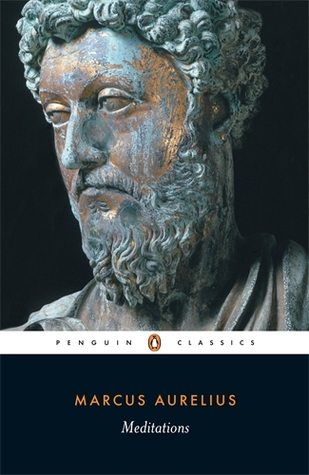
Marcus Aurelius’s Meditations is one of the most intimate documents to survive from antiquity — a private journal kept by a Roman emperor who also happened to be a devoted Stoic philosopher. Written in Greek during the latter years of his reign (likely during military campaigns on the Danube frontier in the 160s–170s CE), the book was never intended for publication. It reads accordingly: personal, repetitive, sometimes halting, always earnest. Aurelius addresses himself in the second person throughout, setting down reminders, rebukes, and resolutions as a form of daily moral exercise rather than a polished philosophical treatise.
The work has no formal structure. It is organized into twelve books, but these divisions are largely arbitrary, and the same themes surface and resurface like a steady drumbeat: the brevity of life, the indifference of nature, the need to act justly, the importance of keeping the rational faculty — the hegemonikon, or governing principle — free from passion and distortion. Aurelius draws heavily on the Stoic tradition, particularly the freed slave Epictetus, whose lectures he quotes and paraphrases throughout. Yet the Meditations is less a work of systematic philosophy than a record of one man’s lifelong struggle to live by principles he knew but found difficult to embody consistently. That gap between aspiration and practice gives the book much of its enduring human warmth.
Key takeaways
-
The dichotomy of control is the book’s beating heart. Aurelius returns constantly to the Stoic distinction between what is “up to us” (our judgments, intentions, and responses) and what is not (external events, others’ opinions, death, fortune). Equanimity follows from accepting that distinction and focusing energy only on the former.
-
Impermanence as a practical tool, not a source of despair. He meditates repeatedly on the transience of all things — emperors, empires, fame, grief — not to induce nihilism but to loosen the grip of fear and desire. If everything passes, neither success nor failure deserves the weight we give it.
-
The obligation to act for the common good. Aurelius insists that human beings are social creatures by nature, made for cooperation. Retreating into cynicism or contempt for others is a failure of one’s rational nature. Even when people are frustrating or wicked, the proper response is patience and continued effort toward justice, not withdrawal.
-
The self as the only domain of genuine rule. There is a quiet irony throughout: the most powerful man in the Western world writes to remind himself that his authority over Rome matters far less than his authority over his own mind. Real kingship is self-mastery.
-
Anger and disturbance are always self-inflicted. A recurring theme is that it is never events themselves but our judgments about events that disturb us. The same Stoic insight appears in different formulations dozens of times, suggesting Aurelius found it easy to understand intellectually and difficult to internalize emotionally.
-
The “view from above” as a meditative practice. Aurelius frequently zooms out imaginatively to a cosmic scale — picturing cities, centuries, and whole civilizations as momentary flickers — to shrink the apparent importance of whatever is currently troubling him. This bird’s-eye perspective is one of the book’s most distinctive rhetorical and psychological gestures.
-
Virtue is its own complete reward. In the Stoic tradition Aurelius inherits, virtue (arete) is the only true good; health, wealth, and reputation are “preferred indifferents,” neither genuinely good nor genuinely bad. This conviction underlies his insistence that a good person can live well under any circumstances — a radical claim that the Meditations tests not in theory but in the unforgiving context of actual imperial power and responsibility.