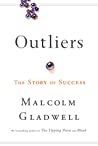
Malcolm Gladwell’s Outliers is an investigation into the hidden factors that shape exceptional success. Rather than accepting the conventional narrative that high achievers rise purely through individual talent and ambition, Gladwell argues that success is inseparable from context — the era someone is born into, the community that raised them, the opportunities they happened to encounter, and the cultural legacies they carry without always realizing it. The book blends social science research, historical anecdote, and storytelling to build a cumulative case that the “self-made” person is largely a myth.
Gladwell structures his argument through a series of vivid case studies. He examines why a disproportionate number of elite Canadian hockey players are born in January, why Bill Gates and the Beatles share a particular kind of origin story, and why Jewish lawyers in mid-twentieth-century New York came to dominate corporate litigation in unexpected ways. He also explores how cultural attitudes toward authority contributed to a pattern of plane crashes at one airline, and how the agricultural heritage of rice farming in parts of Asia may help explain differences in mathematical achievement. Throughout, Gladwell’s tone is curious and conversational rather than academic — he writes like a journalist fascinated by counterintuitive puzzles, guiding the reader toward “aha” moments rather than grinding through data.
Key takeaways
-
The 10,000-hour rule: Drawing on research by psychologist Anders Ericsson, Gladwell popularizes the idea that world-class mastery in any cognitively complex field typically requires roughly 10,000 hours of deliberate practice. The Beatles’ Hamburg residencies and Bill Gates’s early access to a computer terminal are offered as examples of people who accumulated those hours unusually early.
-
Birthdate and relative age matter enormously: In systems with annual cutoff dates — youth sports leagues, school enrollment — children born just after the cutoff are the oldest and most physically mature in their cohort. They receive more attention and coaching, creating a self-fulfilling cycle of advantage that compounds over years. This “relative age effect” explains the January birthday cluster among elite hockey players.
-
Opportunity is not randomly distributed: Gates’s access to a time-sharing terminal at his Seattle prep school in the late 1960s was extraordinarily rare. Gladwell uses this and other examples to argue that exceptional achievers almost always had access to a specific, unusual opportunity at a critical moment — and that luck of circumstance is as important as individual drive.
-
Cultural legacy shapes behavior in lasting ways: Gladwell explores how the “culture of honor” in Appalachian communities, traced to herding economies in Scotland and Ireland, persists in patterns of violence and conflict response generations later. Similarly, he argues that Confucian values around hard work and persistence, reinforced by labor-intensive rice cultivation, translate into measurable academic tenacity.
-
IQ and talent have thresholds, not linear payoffs: Beyond a certain level of intelligence, additional IQ points do not reliably produce additional achievement. What distinguishes people above the threshold is practical intelligence, social savvy, and the confidence to advocate for themselves — traits Gladwell links to socioeconomic upbringing, drawing on sociologist Annette Lareau’s research on “concerted cultivation” in middle-class families.
-
Meaningful work is its own form of advantage: Gladwell profiles Jewish garment workers in New York whose demanding, autonomous labor — though unglamorous — gave them transferable skills in complexity, negotiation, and entrepreneurship that their children leveraged into law and finance. Work that is complex, offers autonomy, and creates a clear link between effort and reward produces people who are more capable and more motivated.
-
Success stories should be retold honestly: Gladwell closes with his own family history, tracing his mother’s trajectory from colonial Jamaica through the particular accidents of skin tone, timing, and institutional opportunity that made her education and emigration possible. The point is not to diminish achievement but to encourage societies to redesign systems — in education, immigration, and opportunity — so that hidden talent is not routinely wasted by circumstance.