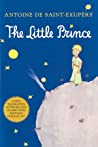
Antoine de Saint-Exupéry’s The Little Prince is a slim, deceptively simple fable first published in French in 1943. Narrated by an aviator who has crash-landed in the Sahara Desert, it recounts his encounter with a small, otherworldly boy who has traveled to Earth from a tiny asteroid called B-612. The prince describes the various planets he visited on his journey, each inhabited by a single absurd adult — a king with no subjects, a vain man who craves applause, a drunkard who drinks to forget his shame — and through these brief, pointed portraits Saint-Exupéry builds a quiet but devastating critique of grown-up life: its self-importance, its obsession with numbers and utility, its forgetting of what truly matters.
The emotional heart of the book is the prince’s relationship with a rose he left behind on his asteroid and his friendship with a fox he meets on Earth. The fox teaches him the book’s most celebrated lesson — that to love someone is to “tame” them, to create unique ties that make each person irreplaceable. The rose, difficult and vain though she was, was tamed by the prince, and so she is his rose alone, more precious than a thousand identical roses. The story ends with the prince’s mysterious departure back toward his star, leaving the narrator — and the reader — with grief mingled with consolation. Saint-Exupéry writes in a tone that is tender, melancholy, and gently ironic, addressing children on the surface while speaking most directly to adults who have lost touch with their inner child.
Key takeaways
-
“What is essential is invisible to the eye.” The fox’s central teaching insists that the deepest truths — love, friendship, meaning — cannot be measured or observed directly; they must be felt with the heart, a faculty adults habitually neglect.
-
Grown-up absurdity as social satire. The sequence of single-inhabitant planets functions as a compact satirical gallery: each adult is trapped in a closed loop of vanity, authority, or habit, utterly unable to see beyond their own preoccupation, which Saint-Exupéry treats as the defining danger of adulthood.
-
Taming as the root of meaningful relationship. The fox explains that “taming” — establishing bonds and mutual obligation — is what transforms another being from a stranger into someone unique and irreplaceable. Love is not a feeling that simply arrives; it is created through time, ritual, and devoted attention.
-
The rose and the cost of love. The prince’s complicated rose is vain, demanding, and sometimes dishonest, yet she is his because he has cared for her. The book suggests that love is inseparable from responsibility, and that difficulty does not diminish but rather deepens attachment.
-
Childhood vision versus adult blindness. The narrator’s opening anecdote — adults who saw only a hat in his drawing of a boa constrictor digesting an elephant — establishes that children perceive imaginatively and holistically, while adults reduce everything to the literal and the functional, a capacity loss the book mourns throughout.
-
Loneliness and the longing for connection. Both the narrator and the prince are fundamentally lonely figures. Their brief companionship in the desert, and the prince’s enduring grief over leaving his rose, give the fairy-tale surface an undertow of genuine sorrow about how hard it is to truly reach another person.
-
Death and return as ambiguous consolation. The prince’s departure — likely a form of death, achieved by a snakebite — is framed not as tragedy but as return to his star and his rose. The book refuses simple resolution, leaving readers to sit with both the loss and the faint, starlit comfort of imagining the prince laughing somewhere above.