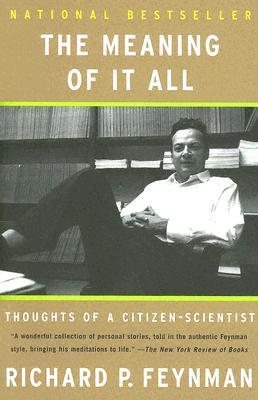
Richard Feynman delivered these three lectures at the University of Washington in 1963, and they were only published as a book decades later, in 1998. The collection captures Feynman at his most publicly philosophical — loose, conversational, and willing to stray far from the blackboard. The subject is nothing less than the relationship between science, uncertainty, and human values. Feynman is not writing a technical book; he is thinking out loud about what it means to live in an age shaped by scientific knowledge, and what obligations that knowledge creates for how we reason and speak.
The first lecture lays out what Feynman considers the essential spirit of science: a cultivated tolerance for doubt. He argues that the willingness to not know, to hold beliefs provisionally and revise them in light of evidence, is not a weakness of scientific thinking but its defining strength. The second lecture turns more critical, examining the uneasy tensions between scientific culture and religious, political, and social institutions — places where, Feynman observes, uncertainty is rarely welcomed and authority tends to harden into dogma. The third lecture is the most personal and scattered, a loosely organized meditation on pseudo-science, the press, international politics, and what a society that genuinely valued scientific thinking might look like. Throughout all three, Feynman’s voice is unmistakably his own: blunt, self-deprecating, frequently funny, and animated by a deep unease with intellectual dishonesty in any form.
Key takeaways
-
Doubt as a virtue. Feynman’s central moral claim is that uncertainty is not a failure of knowledge but its precondition. He argues that learning to say “I don’t know” — and meaning it — is one of the most important things science has taught humanity, and one of the hardest for institutions to tolerate.
-
Science does not settle values. Feynman is careful to insist that science can tell us what is but not what ought to be. He resists the temptation to make science into an all-purpose worldview, acknowledging that questions of ethics and meaning lie genuinely outside its jurisdiction.
-
Religion and science can coexist — uncomfortably. He treats religion with more nuance than many of his scientific peers, suggesting that the ethical and aesthetic dimensions of religious life are not simply threatened by science, but that specific factual claims made by religious institutions often are. The tension is real and should not be papered over.
-
Pseudo-science and the corruption of language. Feynman is sharply critical of the way scientific-sounding language is borrowed to lend credibility to claims that have not earned it — in advertising, politics, social science, and popular psychology. He sees this as a kind of intellectual fraud that erodes the public’s ability to reason.
-
The press and the problem of unearned certainty. He expresses frustration with how journalism tends to flatten nuance, turning tentative findings into confident headlines and creating a public culture where every question seems settled the moment someone authoritative speaks.
-
Freedom requires the tolerance of doubt. Feynman connects epistemic humility to political freedom, arguing that authoritarian systems — of both the left and the right — tend to require certainty and punish questioning. A society that genuinely practiced scientific doubt would, he implies, be structurally resistant to certain kinds of tyranny.
-
The lectures are imperfect, and that is part of their value. Unlike Feynman’s more polished work, these talks wander, contradict themselves, and occasionally run dry. That roughness is honest — it shows a brilliant scientist working through questions he does not have clean answers to, which is exactly the posture he is advocating.