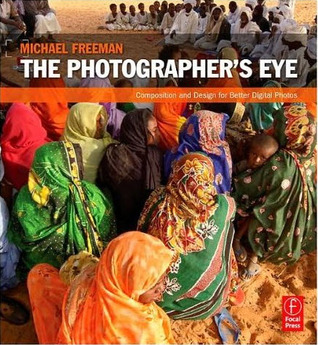
Michael Freeman’s The Photographer’s Eye is a practical and theoretical guide to visual composition in photography. Rather than offering a simple rulebook, Freeman explores the underlying perceptual and aesthetic principles that govern why certain images work — why a viewer’s eye moves in a particular direction, why negative space creates tension, or why an off-center subject can feel more dynamic than one placed squarely in the frame. Drawing on decades of professional experience as a photojournalist and travel photographer, Freeman approaches composition not as a set of constraints but as a toolkit for intentional decision-making in the field.
The book is organized around the core elements of visual design as they apply to the camera: the frame itself, the placement of graphic elements, light, color, and the moment of capture. Freeman writes with authority and clarity, grounding abstract concepts in concrete photographic examples — many of them his own. His tone is analytical without becoming academic, and he consistently returns to the central idea that good composition is a learned skill, not an innate gift. The photographer’s eye, in his view, is one trained to see the world in terms of shapes, lines, tones, and relationships before the shutter is ever pressed.
Key takeaways
-
The frame is an active element. Freeman emphasizes that the edges of a photograph are not passive borders but dynamic forces that interact with every subject inside them. How close an object is to the edge, and how much space surrounds it, fundamentally alters the image’s mood and energy.
-
Design principles from fine art apply directly to photography. Concepts such as the rule of thirds, the golden section, visual weight, and the tension between graphic elements are inherited from painting and graphic design — and Freeman argues photographers benefit from understanding their origins, not just their recipes.
-
There is no single correct composition. A recurring theme is that most scenes offer multiple valid compositional choices, each producing a different meaning or feeling. The photographer’s job is to recognize those options and choose deliberately rather than defaulting to habit.
-
Light and color function as compositional tools. Beyond subject placement, Freeman shows how the direction and quality of light, and the relationships between colors, create structure in an image — guiding the eye, establishing hierarchy, and generating emotional tone.
-
Graphic elements — lines, shapes, patterns, and textures — are the building blocks of visual organization. Freeman trains the reader to see beyond literal subject matter and identify the abstract geometry embedded in everyday scenes, which is often what gives a strong photograph its underlying order.
-
The moment of capture is inseparable from composition. Particularly in documentary and street photography, composition is not something arranged in advance but seized in real time. Freeman discusses how anticipation, timing, and movement all become part of the compositional act.
-
Understanding why an image fails is as instructive as admiring one that succeeds. Freeman encourages photographers to analyze their own weaker shots rigorously, treating compositional missteps as a diagnostic tool for sharpening visual judgment over time.