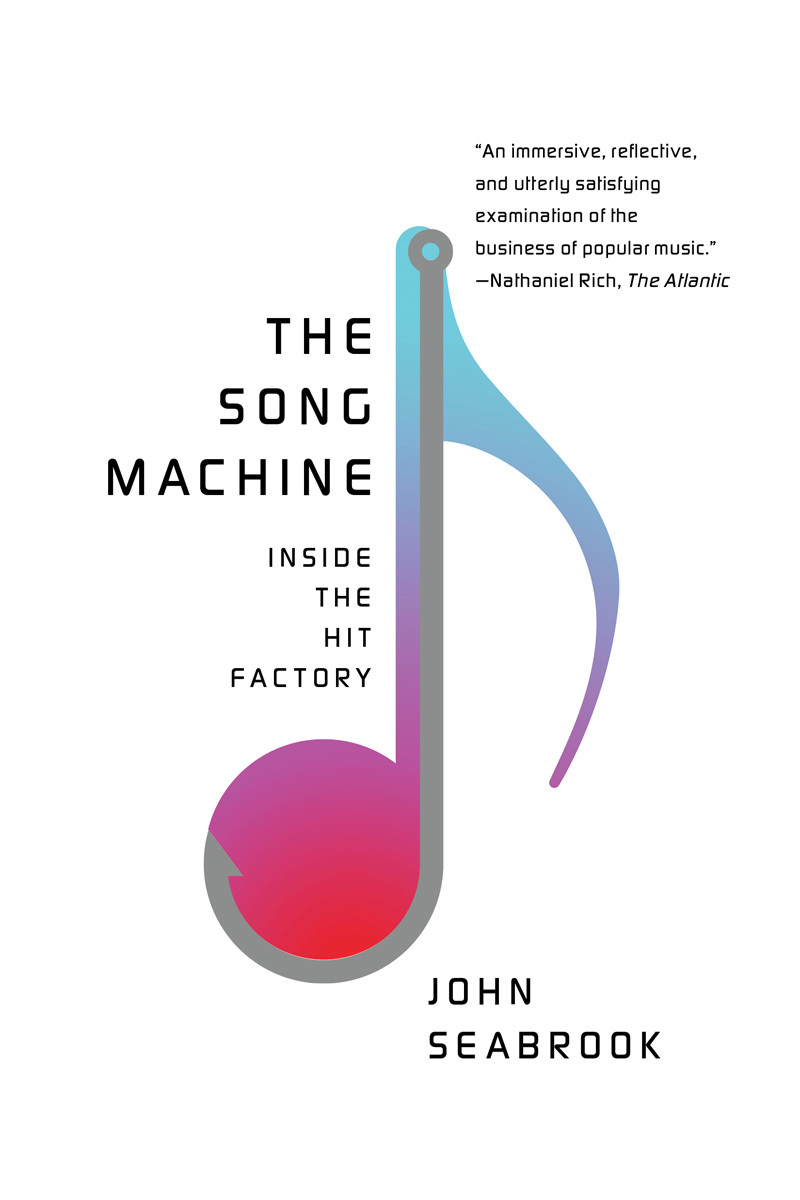
John Seabrook’s The Song Machine: Inside the Hit Factory is a deep dive into the industrial machinery behind contemporary pop music — the hit-making system that produces the carefully engineered songs dominating radio, streaming, and global charts. Seabrook, a staff writer at The New Yorker, brings a journalist’s curiosity and a music fan’s ambivalence to the subject, tracing the origins of modern pop production back to Sweden in the late 1980s and following the assembly-line songwriting and production model as it spread to America and eventually swallowed the entire mainstream music industry. The book is part cultural history, part business investigation, and part meditation on what it means to make and listen to music in an era when emotional response can be reverse-engineered.
The narrative centers on the Swedish producer and songwriter Max Martin and his mentor Denniz PoP, who together developed the approach that would come to define pop music for the next three decades. Working out of a Stockholm studio called Cheiron, they pioneered a production style built on melodic hooks, meticulous verse-chorus structures, and an ear for what Seabrook calls “the chug” — that rhythmic, irresistible propulsion that makes a song physically hard to stop listening to. From the Backstreet Boys and *NSYNC to Britney Spears, Katy Perry, and Rihanna, the influence of this Scandinavian school is everywhere. Seabrook chronicles how the industry evolved from artist-driven albums to a singles economy, and how the rise of digital distribution and streaming platforms accelerated the shift toward songs built for immediate impact rather than long-term artistic development.
Key takeaways
-
The Swedish miracle: Much of contemporary pop can be traced to a small Stockholm suburb and a handful of producers trained in the Denniz PoP/Max Martin tradition. Sweden’s music export success is partly attributed to strong state support for music education and partly to the outsider’s ability to strip away the self-consciousness that often weighs down American pop.
-
Topline vs. track: Modern hit-making involves a distinct division of labor. Producers build the instrumental “track,” while specialized “topliners” — often uncredited — write the melodies and lyrics over it. This assembly-line approach can involve dozens of people crafting a single song, raising deep questions about authorship and authenticity.
-
The melodic math of a hit: Seabrook explores the concept of “melodic math,” the idea that certain chord progressions, rhythmic patterns, and melodic intervals reliably trigger pleasure responses in listeners. Producers like Max Martin study and deliberately deploy these elements, making songwriting less about inspiration and more about craft and calculation.
-
The fall of the album: The book traces how the album as an artistic unit was gradually displaced by the individual song, a process accelerated first by iTunes and then by streaming services, which pay per stream regardless of album context. This fundamentally changed how artists and labels invested their resources.
-
The label system under pressure: Seabrook examines how major labels scrambled to adapt as digital disruption eroded their traditional business model. Rather than discovering and developing artists organically, they increasingly relied on proven hitmakers to reduce risk, further concentrating power among a small number of elite producers and writers.
-
The tension between art and product: Throughout the book, Seabrook honestly grapples with his own complicated feelings — he finds himself genuinely moved by songs he knows are deliberately manufactured, and he doesn’t fully resolve whether that enjoyment is something to be embarrassed about or simply accepted. This personal thread gives the book its intellectual honesty.
-
Rihanna and the modern star: Using Rihanna as a case study, Seabrook illustrates how today’s pop star functions less as an auteur and more as a brand vehicle — a charismatic surface onto which a team of songwriters, producers, and image consultants project a carefully constructed identity. The star’s role is interpretation and presence, not necessarily creation.